Inside IB: Speaking with Confidence in English Language Acquisition
Posted on |
Inside IB: Speaking with Confidence in English Language Acquisition
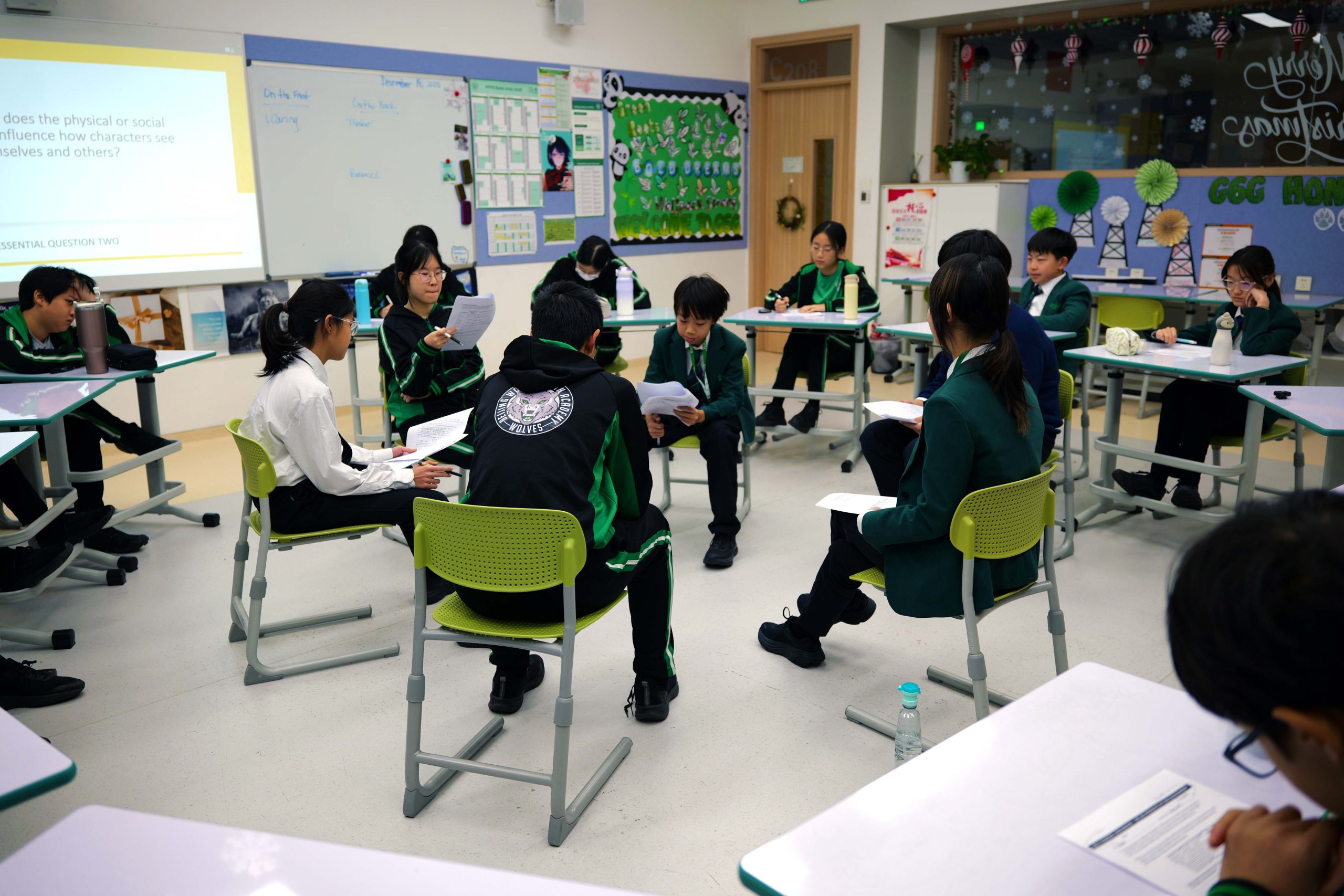
How do students learn to communicate ideas clearly and confidently in a second language? In Grade 8 Phase 4 English Language Acquisition, Ms. McAdams designed a lesson that placed speaking skills at the centre of learning. Using a Fishbowl discussion format, students demonstrated the interactive communicative abilities required by MYP Criterion C: Speaking at the proficient level.
The Lesson in Action
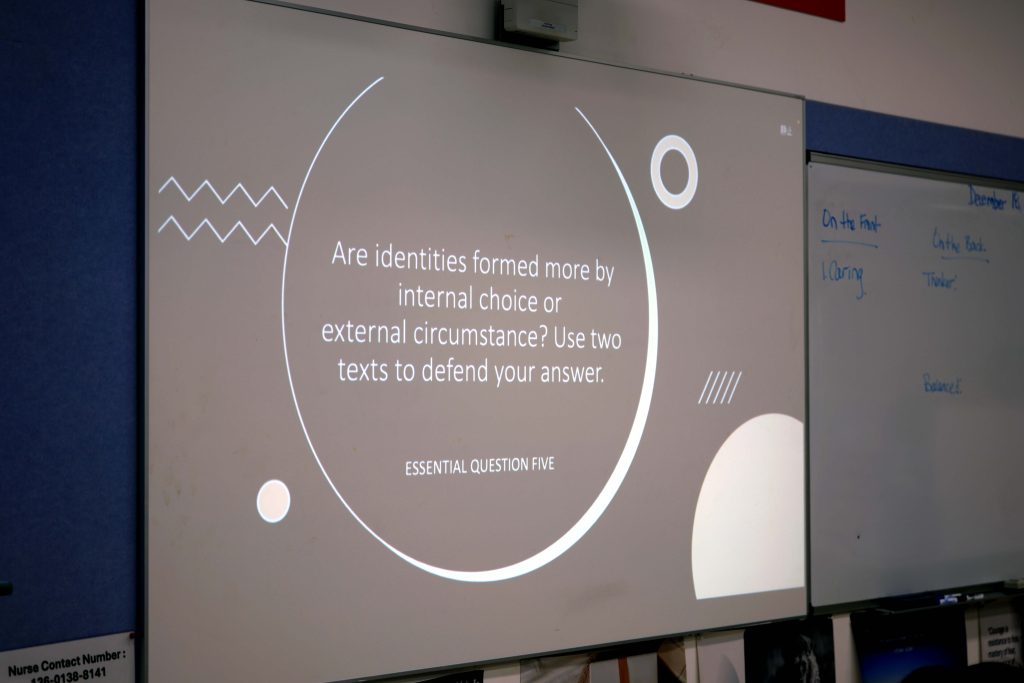
The discussion focused on the unit question: Are we products of our environment? Students explored this theme through four literary texts—“What’s in a Name?”, “All Summer in a Day”, “American History”, and selected immigrant narratives.
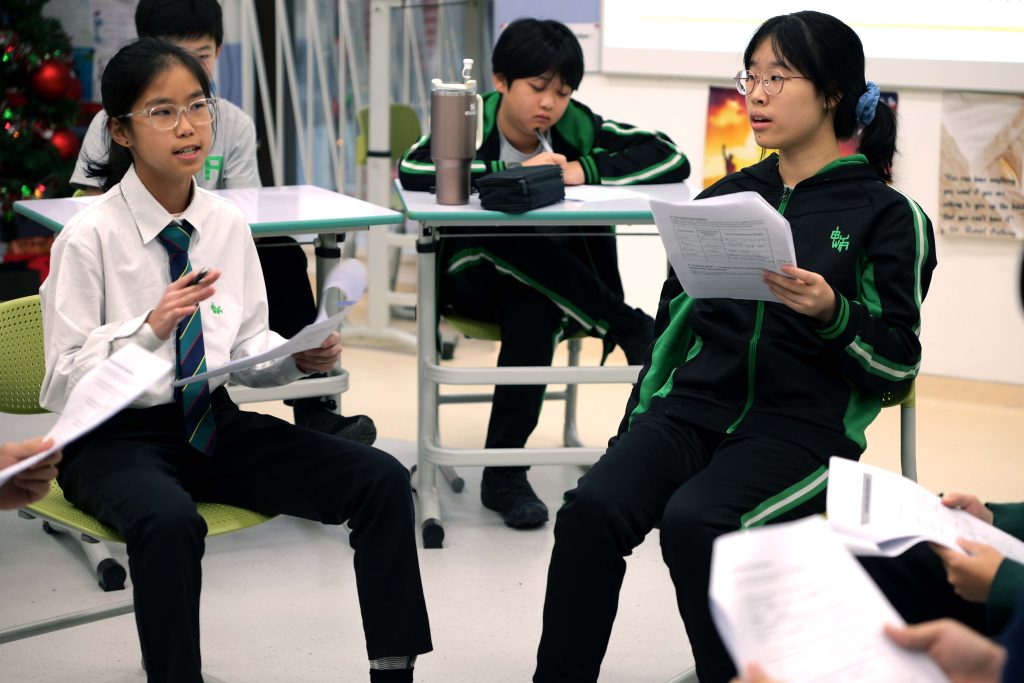
In the Fishbowl, an inner circle of speakers engaged in real-time dialogue while an outer circle observed and prepared follow-up questions. Students were expected to:
Make and defend inferences about identity and relationships.
Cite textual evidence with page or paragraph references.
Use academic vocabulary such as identity, inference, cultural conflict, resilience, and adaptation.
Respond respectfully to peers and build on others’ ideas.
This structure allowed students to practise spontaneous interaction, a key component of Criterion C, while modelling the collaborative exchange of ideas that defines IB learning.
Criterion C in Focus
At the proficient level, students should be able to:
Use a wide range of vocabulary related to the unit theme (family, environment, experiences).
Apply a wide range of grammatical structures with general accuracy.
Speak with clear pronunciation and intonation so ideas are comprehensible.
Communicate all or almost all required information clearly and effectively during interaction.
In this lesson, these descriptors were visible in practice. Students pronounced key terms such as experience, inference, and conflict with appropriate stress and intonation. They structured responses using sentence starters like: “In [text], the author shows… which suggests that…” and “I disagree with [name] because… My evidence is…”
During Q&A, students justified claims, synthesized ideas across texts, and employed nonverbal techniques—eye contact and gestures—to reinforce meaning.
ATL Skills and Learner Profile Attributes
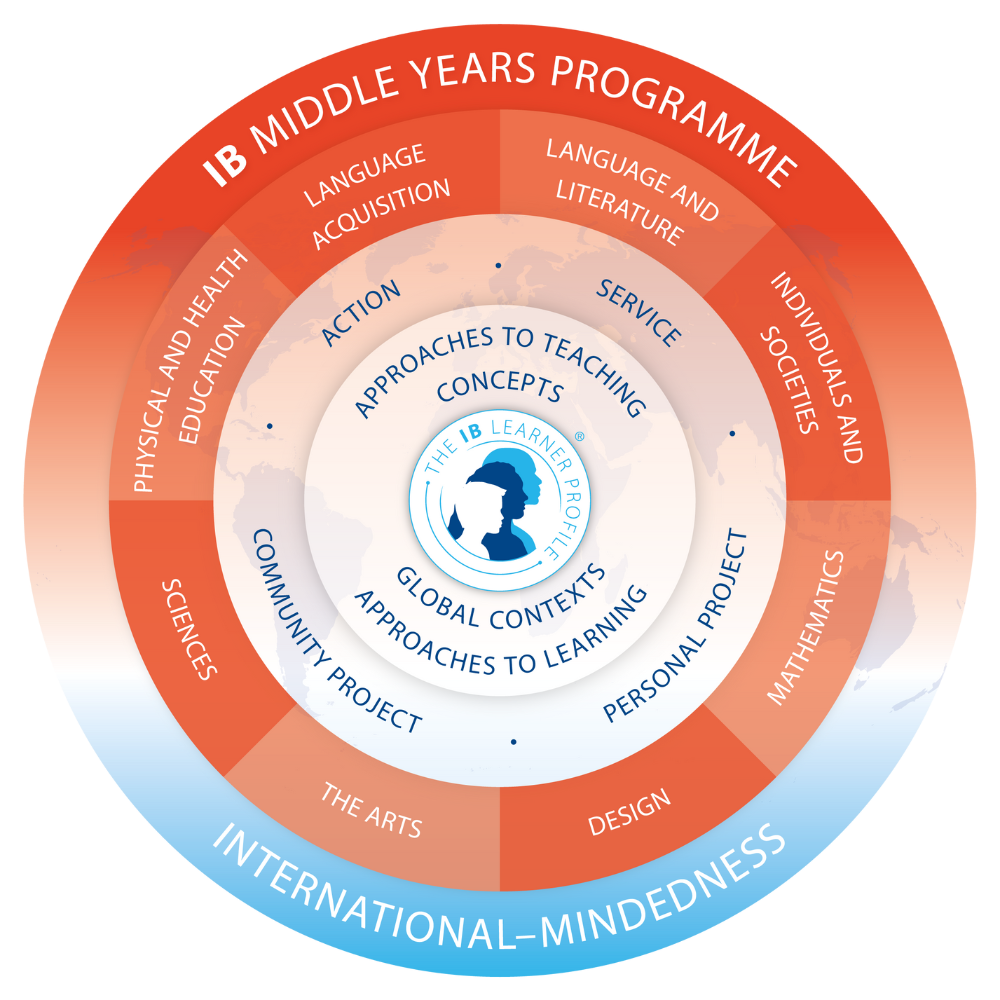
This activity foregrounded two essential Approaches to Learning (ATL) skills:
Communication: Students expressed and defended ideas orally, using academic language and clear delivery.
Thinking: They made reasoned inferences, evaluated perspectives, and connected evidence to themes.
It also reflected the IB learner profile in action: students were communicators, thinkers, risk-takers (sharing original interpretations publicly), and balanced (managing tone and interaction respectfully).
Teacher’s Perspective
Ms. McAdams emphasized that speaking is not just about fluency—it’s about precision and interaction:
“The Fishbowl discussion gives students a chance to demonstrate real communicative competence. They’re not reciting memorized answers—they’re responding, questioning, and building meaning together. This is what Criterion C looks like in action.”
Why It Matters
In an IB classroom, language learning is holistic. Students develop not only linguistic accuracy but also the confidence to engage in academic dialogue—a skill that prepares them for success in global contexts where collaboration and clarity matter.
We are committed to excellence and united by our shared values:
Compassion – We respect and empathise with the rights, opinions, culture, and feelings of others.
Trust – We believe that honesty, integrity, and reliability in ourselves and others forms the cornerstone of our community.
Solidarity – We value harmony and oneness whilst recognising the individuality of each person in our community.
Collaboration – We recognise that the development of the student is the shared responsibility between the student, the family, and the school.
OUR MISSION
Beijing World Youth Academy strives to provide members of our community with excellent learning opportunities that incorporate critical investigation, exposure to different cultural perspectives and assessment against objective criteria. Our mission is to develop principled, open-minded thinkers who are capable of integrating with diverse international communities and who are empowered to shape their environs for the improvement of quality of life for themselves and others.